Higher Education in the USA: Opportunities, Challenges, and Career Impact
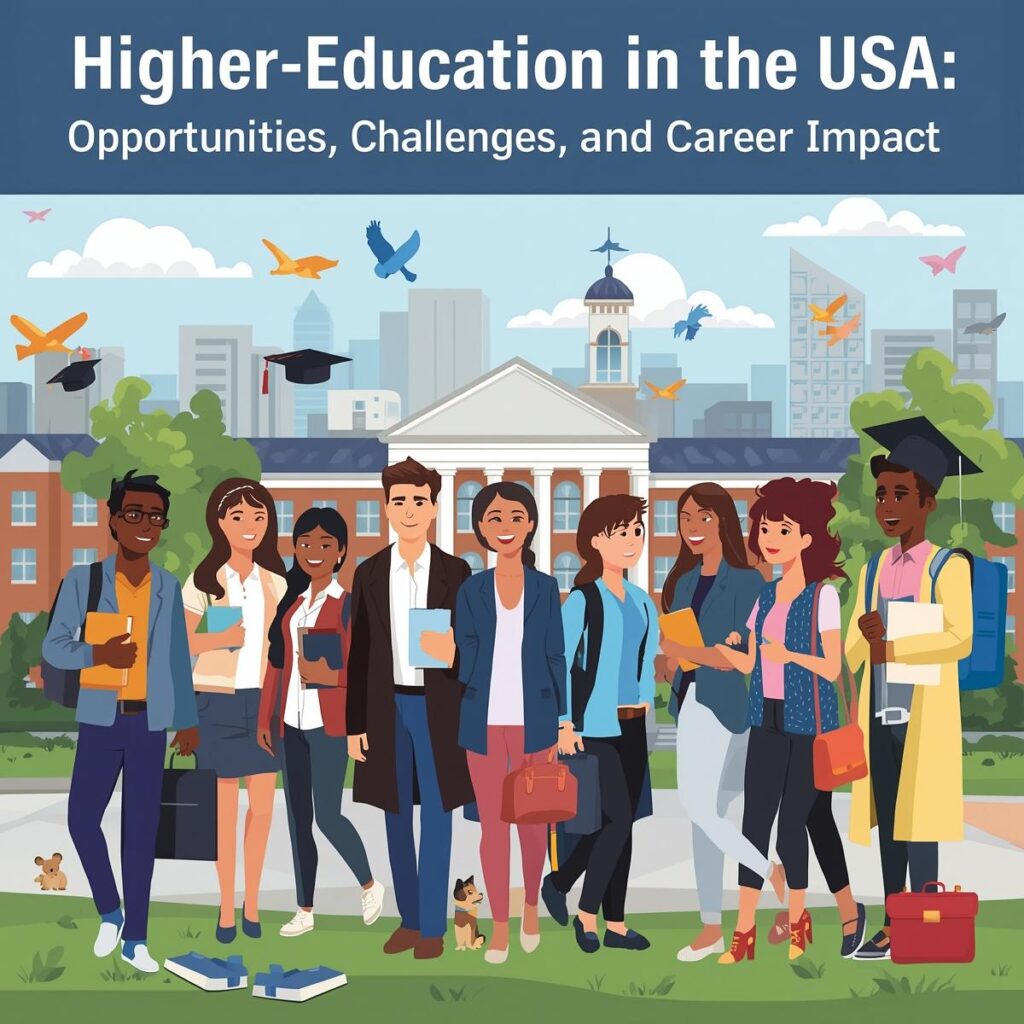
Higher education in the United States is considered one of the most advanced and diverse systems in the world. Every year, millions of students enroll in colleges and universities to pursue degrees that can shape their careers and futures. From community colleges to Ivy League institutions, the U.S. offers a wide range of educational opportunities for both domestic and international students.
Higher education is not just about earning a degree—it is about gaining knowledge, developing skills, and preparing for real-world challenges.
Structure of Higher Education in the USA
The American higher education system is known for its flexibility and variety. Students can choose from different types of institutions, including community colleges, public universities, and private universities.
Community colleges offer two-year associate degrees and are often more affordable. They also provide pathways for students to transfer to four-year universities.
Public universities are funded by state governments and generally offer lower tuition fees for in-state students. Private universities, on the other hand, are independently funded and may have higher tuition costs but often provide more financial aid opportunities.
Students can pursue undergraduate degrees (bachelor’s), graduate degrees (master’s), and doctoral programs depending on their career goals.
Wide Range of Academic Programs
One of the key strengths of higher education in the United States is the variety of academic programs available. Students can choose from fields such as business, engineering, healthcare, social sciences, arts, and technology.
Many universities also offer interdisciplinary programs that allow students to combine multiple areas of study. For example, a student might study both computer science and business to prepare for a career in technology management.
This flexibility allows students to explore their interests and tailor their education to their career aspirations.
The Importance of College Experience
College life in the United States is not limited to academics. It also includes extracurricular activities, social interactions, and personal development.
Students participate in clubs, sports, volunteer work, and leadership programs. These activities help build teamwork, communication skills, and confidence.
Living on campus or independently also teaches students responsibility and time management. The college experience plays a significant role in shaping students’ personalities and preparing them for adulthood.
Career Opportunities After Graduation
A major reason students pursue higher education is to improve their career prospects. In the United States, individuals with college degrees generally have better job opportunities and higher earning potential.
Employers often look for candidates with specialized knowledge and skills, which are developed through higher education. Internships and practical training programs offered by universities also help students gain real-world experience.
Fields such as healthcare, information technology, finance, and engineering offer strong career opportunities for graduates. Higher education provides the foundation needed to succeed in these competitive industries.
The Role of Internships and Practical Experience
Internships are a critical component of higher education in the United States. Many universities encourage or require students to complete internships as part of their degree programs.
Internships provide hands-on experience and allow students to apply what they have learned in the classroom. They also help students build professional networks and gain insights into their chosen industries.
In many cases, internships lead to full-time job offers after graduation. This makes them an important step in the transition from education to employment.
Challenges of Higher Education
Despite its many benefits, higher education in the United States comes with challenges. One of the most significant issues is the cost of tuition. College education can be expensive, and many students rely on loans to finance their studies.
Student debt has become a major concern, as graduates may take years to repay their loans. This financial burden can impact their career choices and lifestyle.
Another challenge is academic pressure. Students must manage coursework, exams, and extracurricular activities, which can be stressful.
Additionally, adapting to college life can be difficult for some students, especially those who are living away from home for the first time.
Financial Aid and Scholarships
To address the issue of affordability, many institutions offer financial aid and scholarships. These programs help reduce the cost of education and make it accessible to a wider range of students.
Financial aid can include grants, scholarships, work-study programs, and loans. Scholarships are particularly valuable because they do not need to be repaid.
Students are encouraged to research and apply for financial aid opportunities early to maximize their chances of receiving support.
The Role of Technology in Higher Education
Technology has transformed higher education in the United States. Online courses, digital libraries, and virtual classrooms have made learning more flexible and accessible.
Many universities now offer hybrid programs that combine online and in-person learning. This allows students to benefit from both traditional and digital education methods.
Technology also supports research and innovation. Students and faculty use advanced tools and software to conduct research, analyze data, and develop new ideas.
Diversity and Inclusion in Higher Education
The United States is home to a diverse student population, and universities strive to create inclusive environments. Students from different cultural, social, and economic backgrounds come together to learn and grow.
Diversity enriches the educational experience by exposing students to different perspectives and ideas. It also prepares them to work in global environments.
Many institutions have programs and support services to promote inclusion and help students succeed academically and socially.
The Importance of Soft Skills
In addition to academic knowledge, higher education helps students develop soft skills such as communication, teamwork, problem-solving, and leadership.
These skills are highly valued by employers and are essential for career success. Through group projects, presentations, and extracurricular activities, students gain practical experience in these areas.
Soft skills also contribute to personal growth and help individuals navigate professional and social situations effectively.
Future Trends in Higher Education
The future of higher education in the United States is evolving. Emerging technologies such as artificial intelligence and data analytics are shaping the way education is delivered.
There is also a growing focus on skill-based learning. Employers are increasingly looking for practical skills rather than just degrees.
Micro-credentials and short-term certification programs are becoming more popular. These programs allow students to quickly gain specific skills and enter the workforce.
Additionally, efforts are being made to make education more affordable and accessible to all students.
Conclusion
Higher education in the United States offers vast opportunities for personal and professional growth. It provides students with the knowledge, skills, and experiences needed to succeed in a competitive world.
While challenges such as high costs and academic pressure exist, financial aid programs and support services help address these issues.
By taking advantage of the opportunities available and staying committed to their goals, students can make the most of their higher education experience and build successful careers.