The Role of STEM Education in the USA
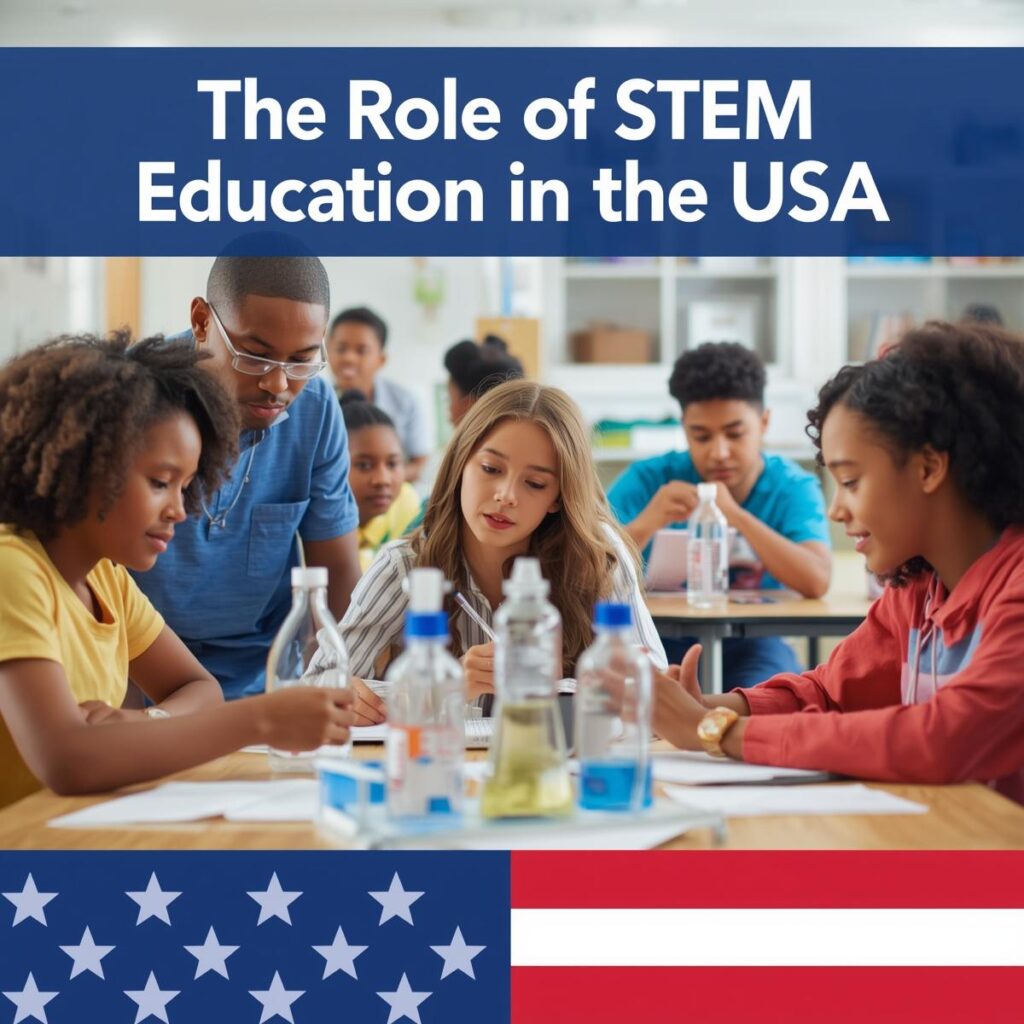
STEM education, which stands for Science, Technology, Engineering, and Mathematics, has become a cornerstone of the United States’ educational priorities. In today’s fast-paced, technology-driven world, STEM skills are essential for innovation, economic growth, and global competitiveness. Schools and universities across the U.S. are investing heavily in STEM programs to prepare students for careers in science and technology.
STEM education not only equips students with technical knowledge but also develops critical thinking, problem-solving, and analytical skills.
Why STEM Education is Important
The demand for STEM professionals in the United States is growing rapidly. Fields such as artificial intelligence, biotechnology, cybersecurity, renewable energy, and data science require a skilled workforce.
STEM education ensures that students are ready to meet these challenges. It fosters creativity, innovation, and practical problem-solving abilities, which are critical in today’s job market.
Moreover, STEM skills are transferable and applicable to a wide range of careers, making students more versatile and adaptable.
STEM Education in K-12 Schools
In the U.S., STEM education begins at the K-12 level. Schools integrate science, math, and technology into the curriculum to build foundational skills.
Hands-on learning, laboratory experiments, coding classes, and robotics clubs are common ways students engage with STEM subjects. These activities encourage exploration and curiosity while helping students understand complex concepts in a practical context.
Early exposure to STEM also helps reduce gender and racial disparities by encouraging more diverse students to pursue STEM careers.
STEM in Higher Education
Colleges and universities in the United States offer specialized STEM programs that provide in-depth knowledge and research opportunities. Students can pursue degrees in engineering, computer science, mathematics, physics, chemistry, and other STEM-related fields.
Research projects, internships, and collaborations with industries allow students to gain real-world experience. Higher education institutions also emphasize innovation and entrepreneurship, helping students develop solutions for real-world problems.
Promoting Critical Thinking and Problem-Solving
STEM education goes beyond memorizing facts. It emphasizes critical thinking, analytical reasoning, and problem-solving.
Students learn how to approach complex problems, test hypotheses, and evaluate solutions. These skills are valuable not only in STEM careers but also in everyday decision-making.
Project-based learning is often used to encourage students to work collaboratively and apply STEM principles to solve practical challenges.
STEM and Technology Integration
Technology is closely intertwined with STEM education. Students use software, coding platforms, simulations, and virtual labs to enhance their learning.
Digital tools make learning interactive and engaging. They allow students to visualize abstract concepts, conduct experiments virtually, and collaborate across distances.
Technology also prepares students for the modern workplace, where digital literacy is essential.
Challenges in STEM Education
Despite its importance, STEM education in the United States faces challenges. One of the main issues is the shortage of qualified teachers, especially in rural and underserved areas.
Another challenge is ensuring equal access for all students. Socioeconomic disparities can limit opportunities for students to engage with STEM programs.
Additionally, keeping the curriculum up-to-date with rapidly evolving technology and industry demands requires constant innovation.
STEM Outreach and Inclusivity Programs
To address these challenges, many initiatives focus on promoting STEM education for underrepresented groups. Programs encourage girls, minorities, and low-income students to participate in STEM activities.
Organizations and schools offer mentorship, scholarships, and specialized workshops to increase access and build interest. These efforts aim to create a more diverse and inclusive STEM workforce in the future.
The Role of Extracurricular Activities
Extracurricular STEM activities such as science fairs, robotics competitions, and coding clubs provide hands-on experience and foster a love for learning.
Participation in these activities helps students develop teamwork, leadership, and project management skills. They also offer opportunities for students to innovate and showcase their abilities.
The Impact of STEM on the U.S. Economy
STEM education has a direct impact on the U.S. economy. A skilled STEM workforce drives innovation, research, and technological advancements.
Industries such as healthcare, engineering, IT, and renewable energy rely on STEM professionals. By investing in STEM education, the U.S. ensures that it remains competitive globally and can address future challenges effectively.
The Future of STEM Education
The future of STEM education in the United States is focused on adaptability, inclusivity, and real-world application. Emerging technologies like artificial intelligence, robotics, and biotechnology will shape new STEM curricula.
Schools and universities will continue integrating interdisciplinary approaches, combining STEM with arts (STEAM) to foster creativity alongside technical skills.
Lifelong learning and continuous skill development will become increasingly important, ensuring that students remain competitive in rapidly changing industries.
Conclusion
STEM education is a vital component of the U.S. education system. It equips students with essential skills, prepares them for high-demand careers, and drives innovation in society.
Despite challenges, ongoing efforts to improve access, inclusivity, and technological integration are making STEM education more effective and impactful.
By prioritizing STEM, the United States ensures that its students are well-prepared to meet the challenges of the 21st century, contribute to economic growth, and lead in global innovation.